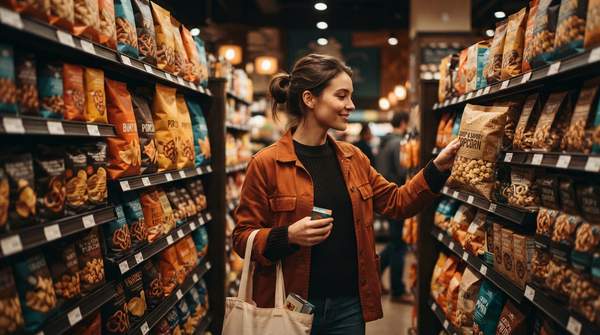
That unplanned chocolate bar or bag of chips that lands in your shopping cart is rarely a random accident. It is often the result of a predictable psychological process, an interaction between your internal emotional state and a carefully crafted retail environment. Impulse snack buying can be understood as a form of self-regulation, where a person acts to either achieve a positive feeling or avoid a negative one. Retailers leverage this by creating specific environmental cues designed to trigger these internal motivations at the moment of purchase.
The journey from browsing to buying an unplanned treat can be broken down into three stages, a framework from environmental psychology known as the Stimulus-Organism-Response (S-O-R) model. This model provides a clear map of an impulse purchase: an external cue in the store (the Stimulus) affects your internal thoughts and feelings (the Organism), which in turn drives your behavior (the Response) to buy the item. While all impulse purchases are unplanned, researchers note that not all unplanned purchases are truly impulsive; the key difference lies in the emotional lack of control and the powerful, immediate urge that defines an impulse. Understanding this cycle is the first step toward making more conscious decisions in the snack aisle.
The Impulse Snack Purchase Framework
To understand how an impulse snack purchase happens, it's useful to break it down into its core components. The Stimulus-Organism-Response model shows how external factors and internal feelings interact to produce an action. The following framework combines this three-stage model with the key psychological drivers and the retail tactics designed to activate them, providing a clear map of the entire process from trigger to transaction.
| Component | Description | Psychological Driver | Retail Tactic |
|---|---|---|---|
| External Trigger (Stimulus) | The process begins with a cue in the shopping environment, such as a product display or promotion, that captures the consumer's attention. | Activates latent cravings or emotional needs. | Strategic placement in high-visibility areas; effective, eye-catching signage. |
| Internal State (Organism) | The consumer's emotional and cognitive state, which processes the stimulus. This includes feelings, cravings, and self-regulation goals. | Promotion Focus: Seeking pleasure, rewards, or indulgence. Prevention Focus: Avoiding negative feelings like stress or low self-esteem. |
Tailored marketing that frames treats as an emotional reward and snacks as a functional solution. |
| Behavioral Response (Purchase) | The final, unplanned action of buying the snack, resulting from the interaction between the external trigger and the consumer's internal state. | Fulfills the immediate self-regulation goal, whether it's to feel good or to feel better. | The successful conversion of an impulse into a sale at the point of purchase. |