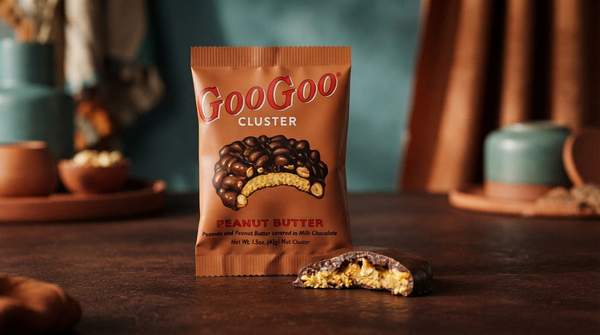
In 1912, in a copper kettle at the Standard Candy Company on the corner of Clark and First Avenue in Nashville, Tennessee, America's first combination candy bar was invented. The Goo Goo Cluster—a roundish mound of caramel, marshmallow nougat, fresh roasted peanuts, and real milk chocolate—broke with a confectionery tradition in which candy bars consisted solely of chocolate, caramel, or taffy. It was the first time multiple elements were mass-produced together in a single retail confection, and that distinction, along with a marketing story that once pitched it as "a nourishing lunch for a nickel," carried an unwrapped local treat into a nationally recognized brand.
The Birth of a Combination: 1912 Invention
According to the company's own history, the Goo Goo Cluster's defining innovation was not a new flavor but a new format. Before its debut, candy bar manufacturing was a single-ingredient affair: a bar was chocolate, or caramel, or taffy, and nothing more. The Goo Goo Cluster stacked caramel, marshmallow nougat, roasted peanuts, and milk chocolate into one confection, making it the first retail candy to mass-produce multiple elements in a single piece.
That ambition came with a practical cost. The company notes that the cluster's "renegade shape"—a roundish mound rather than the conventional rectangle or square of the era—was more difficult to wrap than its competitors' bars. The irregular silhouette that became the product's visual signature was, at the outset, a manufacturing headache, and it helps explain why the candy began its life sold unwrapped rather than packaged.
The name itself, as the company tells it, came from an unlikely source: founder Howell Campbell reportedly told a teacher that his son had just said his first words, "goo goo," and she suggested it as the candy's name. From there came the first slogan: "Goo Goo! It's so good, people will ask for it from birth."