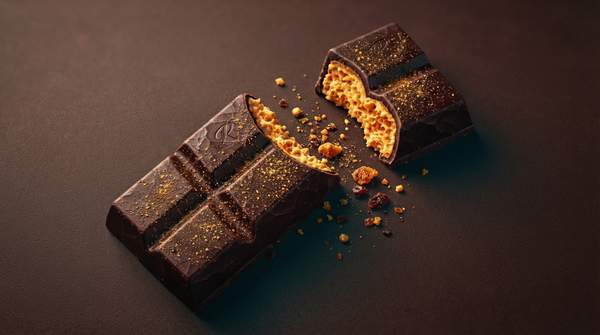
Mouthfeel is the sum of the physical sensations a food or drink produces in the mouth during and after consumption—sensations that are neither taste nor flavor, and that are only partially captured by the word "texture." Where taste is the job of the gustatory system, detecting chemical stimuli like sweetness or bitterness, mouthfeel belongs to the somatosensory realm: the touch, pressure, and friction your tongue, palate, and teeth register. Texture, in turn, is best understood as the mechanical and structural properties of the food itself—hardness, adhesiveness, cohesiveness—many of which can be measured with instruments.
Mouthfeel is the broader, and admittedly more ambiguous, perceptual experience that draws on those mechanical properties plus geometrical ones (particle size, shape) and chemical ones (astringency, moisture release). Sensory scientists have catalogued the vocabulary for this experience, and it is measured in two main ways: trained human sensory panels and instrumental analysis.
Why Mouthfeel Is Not Just Texture
The confusion between mouthfeel and texture is understandable, because the two overlap heavily. Texture profiling, as taught in sensory science courses, concerns itself with mechanical properties such as hardness and adhesiveness—attributes that describe the food's structure and response to force. Mouthfeel, however, extends past the moment of biting and chewing. It includes what lingers after the food is gone: the film of fat or oil coating the palate, the wetness left on the tongue, the drying, puckering grip of an astringent tea or wine. These residual and chemical sensations have no home in a purely mechanical definition of texture, which is why researchers treat mouthfeel as the wider umbrella and texture as one of its contributing domains.
Taste sits apart from both. The gustatory system registers chemical compounds dissolved in saliva—sweet, sour, salty, bitter, and umami—and does so through receptor-driven pathways that have nothing to do with the physical mechanics of the food. A fat-free reformulation illustrates the divide vividly: as sensory science material from Brandeis University notes, the perceived flavor of a product can change dramatically when fat is removed even when the identical flavor composition is used, because fat's contribution is largely mouthfeel, not taste. The flavor-release problem that follows remains incompletely understood, and rheological studies alone have not provided all the answers.