That 3 PM raid on the snack drawer is rarely about hunger. According to the Center for Nutritional Psychology, cravings differ from ordinary hunger in a crucial way: hunger generally signals a need for energy, while a craving is a desire for a particular food. And that desire is usually set off by something identifiable — an emotion, a cue in your environment, or a learned habit. This article walks through the psychology behind each of those three trigger types, then gives you a diagnostic framework to figure out which one is driving your own snacking.
Understanding Snack Cravings: More Than Just Hunger
The distinction matters practically, not just academically. The Center for Nutritional Psychology frames cravings as the product of interacting systems: brain reward circuitry, emotional regulation, learned associations, and environmental cues. A person may crave sweet foods during stress, or associate a familiar meal with comfort and positive memories. Cravings and genuine hunger can overlap, and their underlying causes vary between individuals — which is precisely why a one-size-fits-all "just eat less" approach tends to fail. The midnight craving for chocolate chip cookies is a specific, traceable psychological event with a trigger you can learn to name, not a vague appetite or a character flaw.
Recognizing that variability is the first analytical move. Because the causes differ from person to person, an effective response has to start with self-diagnosis: what was happening, internally or externally, in the moments before the urge arrived? The three categories below cover the psychological territory the evidence consistently points to.
The Brain's Role: Reward Systems and Emotional Links
The mechanism underneath all three trigger types is well mapped. The Center for Healthy Eating and Activity Research at UC San Diego explains that the release of dopamine and serotonin — neurotransmitters associated with pleasure and reward — makes us crave foods that trigger these feel-good chemicals. In other words, your brain has learned that certain snacks deliver a quick chemical payoff, and it requests them on demand when conditions line up.
Harmony Ridge Recovery Center's neuroscience writing adds a useful detail about specificity: a drop in serotonin is commonly associated with a stronger desire for carbohydrates, because eating them can temporarily elevate serotonin levels and improve mood. That temporary elevation is the key word — the mood benefit is short-lived, but the reinforcement loop is not. Each time the snack delivers its chemical reward, the association between the trigger and the food gets a little stronger, which is why cravings become more reliable, not less, over time. Understanding this loop, as the UCSD guide puts it, lets us see cravings in a new light and develop strategies to manage them more effectively.
Your Personal Craving Trigger Diagnostic Framework
Here is the self-assessment tool. Take your last three craving episodes — actual, specific ones you remember — and classify each against the table below by asking which defining question you answer "yes" to for that episode. Most people find one category dominates across episodes, and that dominant category is the starting point for any targeted strategy.
| Trigger Category | Defining Question | Common Examples | Underlying Mechanism |
|---|---|---|---|
| Emotional | Was I feeling a strong emotion — negative or positive — when the craving started? | Stress, anxiety, boredom, loneliness, celebration | Food is sought to trigger dopamine and serotonin and regulate mood |
| Environmental & Sensory | Did I see, smell, or socially encounter food right before the craving? | Sight or smell of food, eating with others, social pressure to eat | Cues activate learned associations that predict a palatable reward |
| Situational & Learned Association | Does this craving reliably appear in a specific context, time, or routine? | Snacking while watching TV or browsing social media; habitual movie popcorn | Classical conditioning: repeated pairing of context with food produces an automatic craving response |
The classification logic runs as follows. If the craving arrived with a feeling — you got a stressful email, or you were bored at your desk — it's emotional. If it arrived with a cue, like the smell of the office bakery or a colleague offering snacks, it's environmental. If it arrived with a context — the couch, the remote, the opening credits, the same time each evening — it's situational. Your dominant category is whichever answer recurs most across the episodes you examine. That classification is the deliverable: it converts a vague, guilt-laden "why do I keep doing this?" into a specific, named pattern you can act on.
Emotional Triggers: When Feelings Drive Food Choices
Emotional triggers are internal states that initiate cravings independently of physical hunger. The UCSD Center for Healthy Eating and Activity Research lists stress, anxiety, and boredom as leading examples, noting that these states lead to cravings for comfort foods. A clinician writing for Sacramento Bariatric Medical Associates reports that the common emotional triggers seen in practice include stress, boredom, anxiety, loneliness — and even celebration, a useful reminder that positive emotions count too, not just negative ones.
The mechanism is mood regulation. Eating certain foods temporarily elevates neurotransmitter levels, improving mood in the short term, and that relief reinforces the behavior. The snack becomes a coping tool the brain reaches for automatically when the matching emotion appears. This is also why the "willpower" framing fails, as the Sacramento practice notes: if you've ever felt frustrated by your inability to "just resist" a craving, you're bumping against a fundamental feature of how the brain's reward system works, not a personal failing. Naming the emotion — "this is stress, not hunger" — is the diagnostic act that interrupts the loop.
Environmental and Sensory Cues: The Power of Your Surroundings
External stimuli can trigger cravings even when you're not hungry at all. The UCSD guide is blunt on this point: the sight or smell of food can trigger cravings regardless of hunger, and social pressures — eating with others, or feeling obligated to finish a meal — can lead to overeating. The aroma from a food truck, a bakery counter on your commute, a candy bowl at reception: none of these are neutral. They are learned signals.
The mechanism is anticipatory. The brain has learned through repetition that these cues predict a pleasurable eating experience, so the cue alone is enough to produce the craving before any food is present. Harmony Ridge's writing reinforces the point from the neuroscience side: psychological and environmental factors shape cravings alongside brain chemistry, with stress, emotional cues, and particular situations able to significantly intensify them. Practically, this category is the most amendable of the three — you cannot easily remove an emotion, but you can often remove, reposition, or route around a cue.
Situational and Learned Associations: Habits and Conditioning
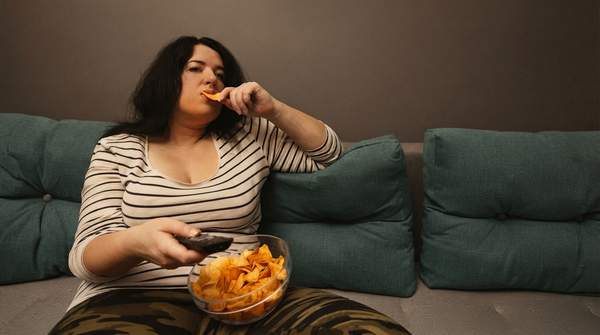
Situational triggers are the product of classical conditioning. When a context is repeatedly paired with eating — TV and chips, scrolling and snacks, the movies and popcorn — the context itself acquires the power to produce a craving. The Center for Nutritional Psychology describes this as learned associations, such as linking a familiar meal with comfort and positive memories. The UCSD guide flags watching TV and browsing social media as situations that create snacking associations; the movie-popcorn case is the textbook illustration of a context that reliably triggers eating whether or not anyone is hungry.
Timing patterns fall into this category too. The Sacramento bariatric practice observes that cravings typically cluster in the late afternoon and evening, with peak times between 3–6 PM and 8–10 PM, timing that corresponds with natural dips in blood sugar and decision fatigue from a full day of choices. The clinician also reports notable gender differences in practice — men more typically craving savory foods like pizza, chips, or burgers, while women more often crave chocolate, ice cream, or baked goods — though that is a practitioner's reported pattern, not a laboratory finding. Either way, if your cravings show up on a schedule, the clock itself has become a conditioned cue.
Taking Control: Your First Step Towards Mindful Eating
Once you've identified your dominant trigger category, the evidence-based first step is the same across all three: mindful awareness. The UCSD Center for Healthy Eating and Activity Research recommends mindful eating as a powerful way to understand and manage cravings — slowing down, savoring each bite, and paying attention to your body's hunger and fullness cues. Crucially, their guidance includes the pause technique: when a craving hits, stop and ask whether you're genuinely hungry or whether another emotion might be driving the urge. That single question is where the diagnostic framework pays off, because you can only answer it accurately once you know your own trigger patterns.
The decision: identify your dominant craving trigger category and begin practicing mindful awareness to understand and respond to cravings more effectively. The measurable indicator is increased self-awareness of craving patterns and a reduction in automatic, unconscious snack consumption. Concretely: classify your next five craving episodes with the framework above. If you can name the trigger category before you open the pantry — and notice even a few episodes where you pause instead of automatically reaching for the snack — the diagnostic is working.
Note: This article addresses psychological triggers only. It is not medical advice or treatment for eating disorders, does not offer a diet plan, and does not cover purely physiological causes such as nutritional deficiencies. It is also not an exhaustive catalog of every possible trigger. If you suspect an eating disorder, consult a qualified professional.
Sources
- Craving - Encyclopedia of Nutritional Psychology — The Center for Nutritional Psychology
- Neuroscience Behind Cravings — Harmony Ridge Recovery Center
- Craving Management: Expert Guide to Understanding & Control Cravings — Center for Healthy Eating and Activity Research
- Distraction Techniques to Control Food Cravings — Sacramento Bariatric Medical Associates