Patient compliance for oral medications can jump from 53% to 90% simply by adding flavor masking agents, dramatically improving healthcare outcomes. This substantial increase, documented by Rootsanalysis, directly enhances medication efficacy and patient well-being. It reveals taste as a critical factor in health interventions.
However, consumers increasingly prioritize health and wellness, but the natural bitterness or off-notes of beneficial ingredients often conflict with palatability expectations. This tension creates a significant hurdle for both pharmaceutical companies and food manufacturers aiming to deliver healthier, more effective products.
The market for flavor masking agents is poised for substantial, sustained growth, driven by scientific breakthroughs in taste science and a fundamental shift in consumer and medical needs. Flavor masking technology emerges as a critical, yet often underestimated, pillar of modern product development. It covertly drives consumer health outcomes and industry profits.
The Fundamentals of Flavor Masking
Adding or increasing the amount of ingredients that impact basic tastes often serves as the initial step in flavor masking strategies, typically accompanied by frequent taste evaluations, according to IFT. This approach suggests a simpler, additive method where palatable ingredients are used to cover undesirable tastes.
In contrast, more precise scientific methods involve specific compounds that interact directly with taste receptors. Lactisole, for instance, blocks sweet taste and reduces umami perception. Sodium and zinc salts suppress bitter taste at certain concentrations, as detailed by Preparedfoods. The suppression of bitter taste by sodium and zinc salts at certain concentrations, as detailed by Preparedfoods, represents a significant evolution beyond basic ingredient additions, moving towards targeted molecular interventions. The effectiveness of bitterness suppression depends on the bitterant's concentration in saliva and its binding proportion, according to PMC. The dependence of bitterness suppression on the bitterant's concentration in saliva and its binding proportion, according to PMC, illustrates the complex, nuanced understanding essential for effective taste modification.
Advanced Technologies Driving Flavor Masking
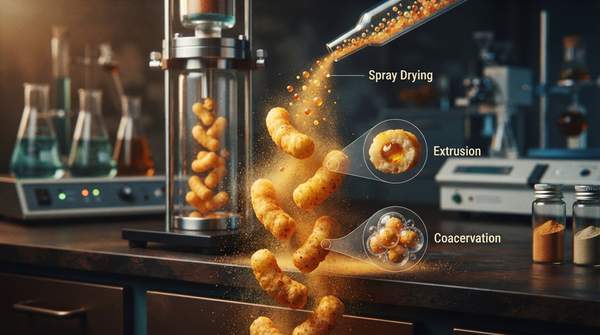
Technological advancements such as microencapsulation, nanotechnology, and spray drying are fueling the growth of the flavor masking agents market, according to Researchandmarkets. These methods allow for precise control over the release and interaction of taste-modifying compounds, enhancing their effectiveness and stability.
The demand for flavor masking agents is surging due to increasing consumer health consciousness and the parallel demand for low-sugar, low-fat, and low-sodium food products. As consumers seek healthier options, manufacturers employ advanced flavor masking technologies to create palatable products that meet these nutritional criteria.
The rapid growth of the flavor masking market, fueled by advanced technologies like microencapsulation, points to a future where food and pharmaceutical products will increasingly rely on sophisticated taste engineering to meet evolving health demands. This elevates taste scientists to a role as crucial as formulation chemists in product development.
The Broader Impact of Taste Engineering
Despite its relatively modest direct market size, flavor masking technology acts as a foundational, high-leverage technology for much larger health-conscious food and multi-billion dollar pharmaceutical sectors. Taste engineering thus transcends mere palatability improvement; it enables entire industries to meet critical consumer and medical demands.
The seemingly minor act of taste masking in oral medications has a disproportionately massive impact, potentially unlocking hundreds of billions in pharmaceutical market value. The dramatic improvement in patient adherence, from 53% to 90%, demonstrates how a subtle intervention reshapes healthcare outcomes and economic potential.
Companies that view flavor masking as a mere additive rather than a critical patient compliance and consumer adoption lever fundamentally miscalculate market potential. The evidence from improved oral medication adherence confirms the strategic importance of this scientific discipline.
Economic Impact and Market Growth
Oral solid dosage forms capture the largest share in the pharmaceutical industry, projected to reach more than USD 900 billion by 2027, according to Rootsanalysis. This vast market segment critically relies on patient acceptance, which is heavily influenced by palatability.
Ignoring the subtle power of flavor masking means leaving substantial revenue unrealized within the oral pharmaceutical market. Improved palatability could unlock a significant portion of this projected $900 billion oral solid dosage market by 2027, fundamentally transforming revenue streams for pharmaceutical companies.
Flavor masking agents are not merely a scientific curiosity; they represent a multi-billion dollar industry segment. Their crucial role in the growth and efficacy of pharmaceutical and food sectors globally extends beyond direct market value, actively enabling broader health and wellness trends.
What are the most effective flavor masking agents?
The effectiveness of flavor masking agents varies depending on the specific taste to be masked and the product matrix. Some common agents include cyclodextrins for bitterness, which encapsulate the offending compounds, and certain amino acids or peptides that modulate taste receptors. Specialized sweeteners and flavor enhancers also play a role in balancing taste profiles.
How do flavor masking agents work in food?
In food products, flavor masking agents work by either physically blocking taste compounds from reaching receptors, chemically modifying the bitter or off-flavor molecules, or by stimulating other taste receptors to create a more pleasant overall sensation. For example, specific compounds can reduce the perception of metallic notes in plant-based proteins or the bitterness in artificial sweeteners through receptor-level interactions.
What are the latest innovations in flavor masking technology?
Latest innovations in flavor masking technology focus on precision and targeted delivery. This includes advanced material science techniques like co-crystallization and emulsion-based systems for controlled release, alongside the development of novel compounds that specifically bind to and deactivate bitter taste receptors without altering other flavors. These innovations aim for highly effective and undetectable taste modification.
The strategic deployment of flavor masking agents represents a significant, ongoing opportunity for industries focused on health and wellness. With the oral solid dosage pharmaceutical market alone projected to exceed USD 900 billion, enhanced patient compliance driven by improved palatability will be a key differentiator. Companies that prioritize sophisticated taste engineering will likely capture a larger share of this expanding market.