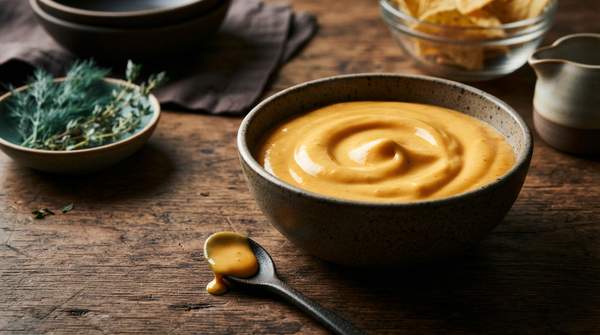
Ever wonder how your favorite creamy dips and smooth sauces maintain their luscious texture without separating into oily and watery layers? The secret lies with emulsifiers, unsung heroes of the culinary world. These remarkable ingredients are essential for stabilizing oil-in-water emulsions, preventing phase separation, and ensuring that snack dips and sauces remain consistently delightful, whether they're store-bought or whipped up in your own kitchen.
Emulsifiers are amphiphilic molecules, meaning they possess both water-attracting (hydrophilic) and oil-attracting (lipophilic) properties. This dual nature allows them to act as a bridge between oil and water, two liquids that naturally resist mixing. By understanding their molecular mechanics and choosing the right types, you can master the art of creating stable, appealing dips and sauces, enhancing both the safety and suitability of your culinary creations.
The Science of Stability: What are Emulsifiers?
At its core, an emulsion is a mixture of two immiscible liquids, such as oil and water, where one liquid is dispersed as tiny droplets throughout the other. In the context of snack dips and sauces, we typically deal with oil-in-water (O/W) emulsions, where oil droplets are suspended in a continuous water phase. Without intervention, these droplets would eventually coalesce and separate, leading to an unappetizing, unstable product. This instability, which can manifest as phase separation or ingredient degradation, can compromise product safety and limit an emulsion's usefulness, according to research published by PMC.
This is where emulsifiers step in. An emulsifier is an amphiphilic substance that adsorbs onto the surface of oil droplets within the water phase. This action significantly reduces the interfacial tension between the oil and water, making it easier for them to mix and stay mixed. The presence of an emulsifier is crucial for developing strategies to enhance the stability of these mixtures. Common emulsifiers used in the food industry include proteins, polysaccharides, phospholipids, and small-molecule surfactants, as noted by PMC.
The Molecular Mechanism of Emulsion Stabilization
Emulsifiers stabilize emulsions by leveraging their unique molecular structure and interaction with both oil and water. To understand this process, consider the following components and their roles in forming a stable emulsion:
- Oil Droplet: This represents the dispersed phase, consisting of tiny oil particles that are suspended within the continuous water phase.
- Water Phase: This is the continuous liquid that surrounds and suspends the oil droplets.
- Emulsifier Molecule: The key player in stabilization, characterized by its dual nature:
- Hydrophilic Head: This part of the emulsifier molecule is attracted to water and faces outwards, interacting with the water phase.
- Lipophilic Tail: This part of the emulsifier molecule is attracted to oil and buries itself within the oil droplet, interacting with the oil phase.
- Interfacial Film: As emulsifier molecules position themselves at the boundary between oil and water, they form a protective barrier or film around each oil droplet. This physical barrier prevents the droplets from merging with other droplets.
- Reduced Interfacial Tension: By adsorbing at the oil-water interface, emulsifiers lower the surface tension between the two immiscible liquids. This reduction in energy makes it easier for the oil and water to mix and remain dispersed, contributing significantly to the emulsion's stability.
This protective interfacial film, combined with the reduction in surface tension, prevents the oil droplets from coalescing and separating from the water, thereby maintaining a stable emulsion. This mechanism is key to improving the texture and shelf life of food products, as explained by Norex Flavours Private Limited.